Niyati Women and Pain Center — Booking & Management Platform
A full-stack Django platform built for a real gynaecology and pain-management hospital — a public booking site backed by dual payment gateways, video consultations, and a role-based staff dashboard covering doctors, patients and payments.
Dual Gateway
Razorpay + HDFCZego API
Video Consultations24+
Hospital Domain ModelsRole-Based
Staff DashboardPublic Site & Staff Dashboard
 Homepage
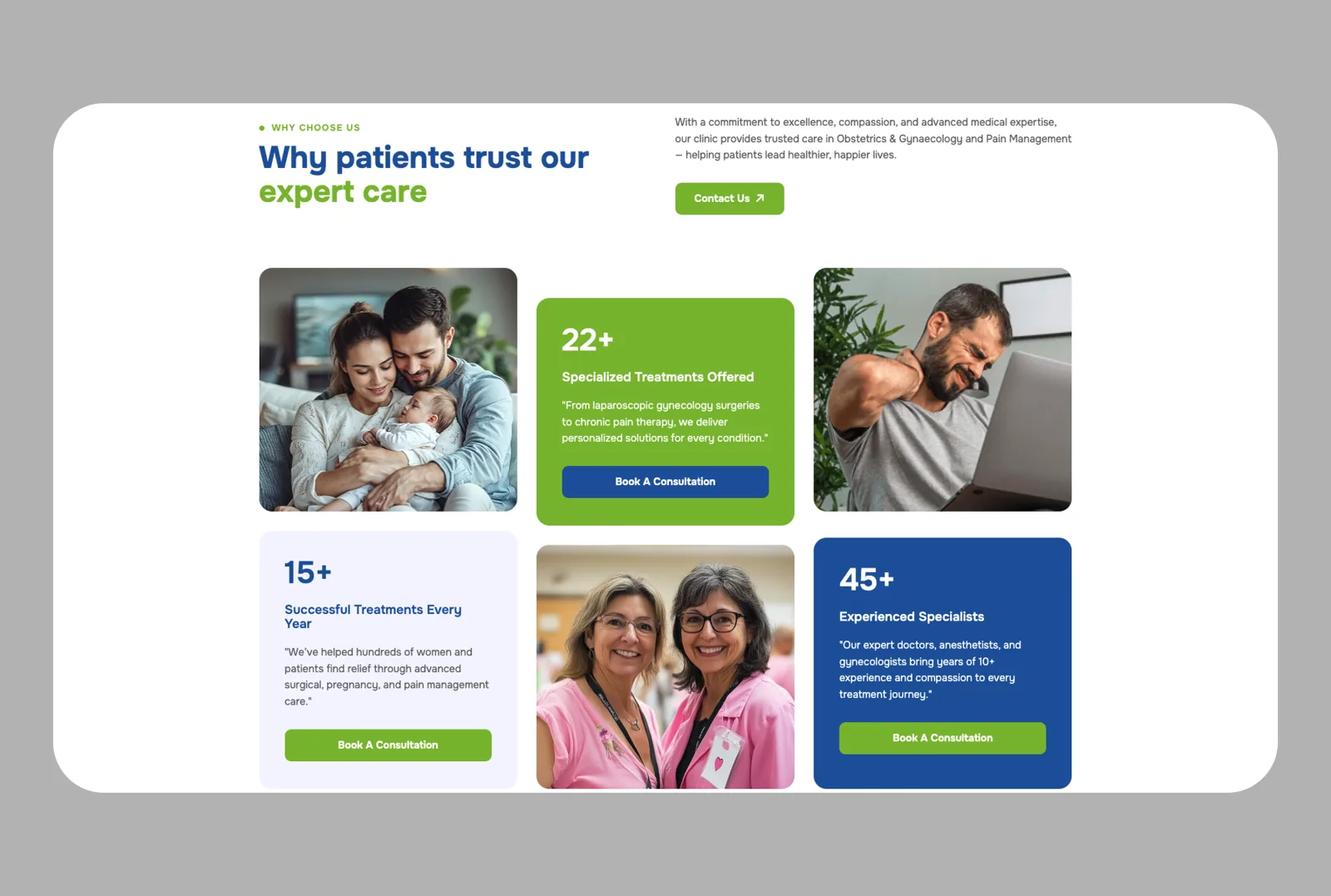 Why Choose Us
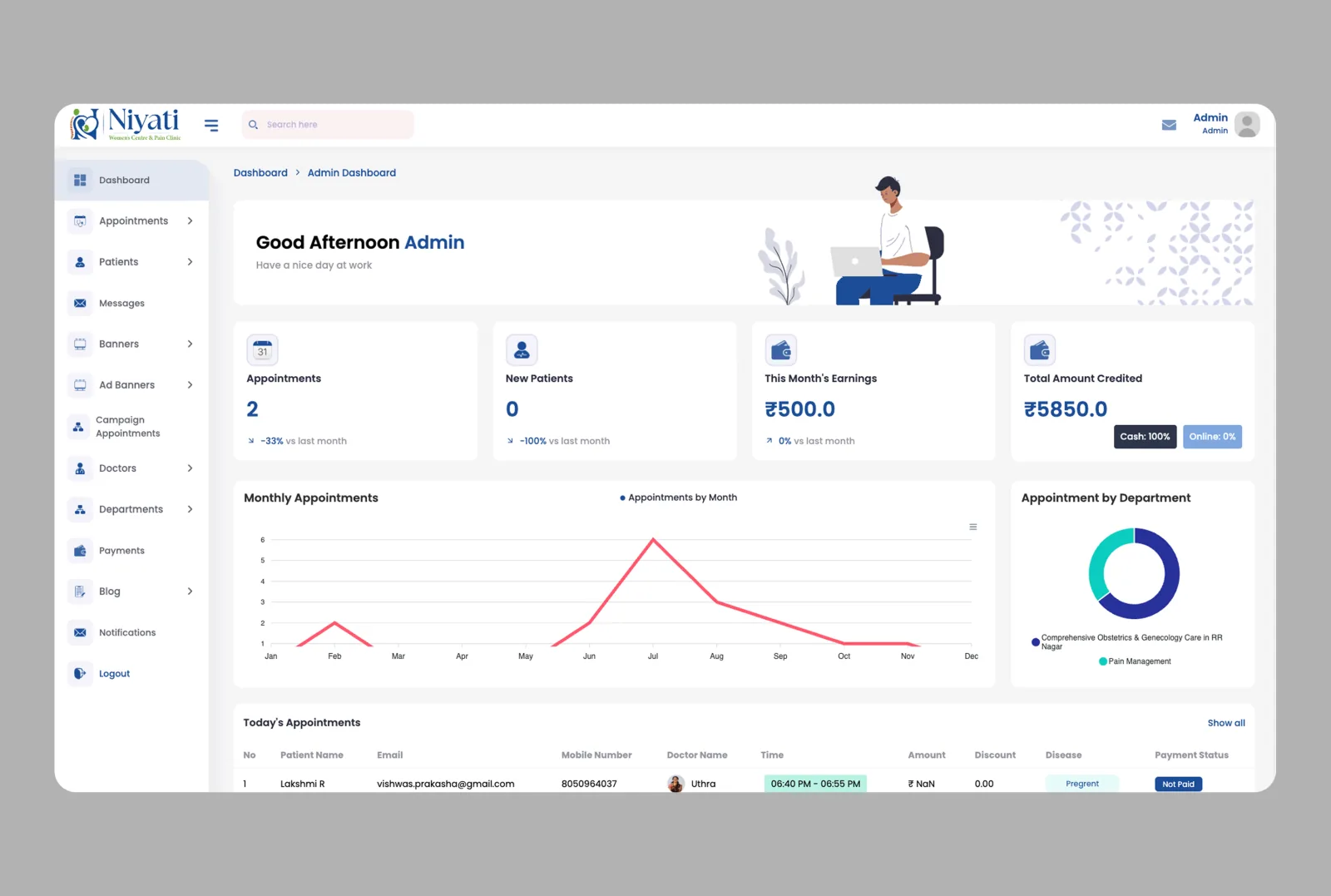 Admin Dashboard
What The Platform Does
Dual Payment Gateways
Razorpay and HDFC SmartGateway, reconciled through one unified payment ledger.
Polymorphic Scheduling
One appointment model references either weekly or one-off doctor timing slots.
Video Consultations
Zego API meeting links generated automatically ahead of appointment time.
Automated Reminders
APScheduler + cron jobs schedule SMS and video-link generation around each booking.
Dual-Tier API Security
Session auth for staff, API-key auth for a companion app's read-only endpoints.
Data-Driven SEO
Dynamic sitemap assembled from five sitemap classes with per-type priorities.
Stack & Integrations
Frontend
Backend
Database
Integrations
How It's Built
Niyati runs Django's MVT pattern in one core app: public views render from
templates/frontend/, staff views from templates/backend/ under
/account/. Appointments reference either a recurring or date-specific timing
slot through a Django ContentType generic relation, decoupling scheduling
from booking logic. The booking flow itself is API-driven — frontend JS calls DRF
endpoints that validate doctor leave/availability, create the patient and appointment
records, then hand off to Razorpay or HDFC for payment.
Post-payment, a post_save signal on Appointment triggers SMS
notifications and, for video visits, schedules an APScheduler job that calls the Zego API
shortly before the appointment to generate a join link. A separate, API-key-protected
read-only endpoint set serves a companion mobile app, kept distinct from the
session-authenticated staff dashboard API — a pragmatic two-tier security model rather
than one shared auth layer for very different consumers.