Orbito — Agency Operations & HRMS Platform
An internal Django + React platform for a digital agency, combining face-recognition/geofenced attendance, task and project delivery with time tracking, and a per-client content-calendar workflow — replacing spreadsheets with one installable app.
Face ID
+ Geofenced Attendance500 MB
Chunked Resumable Uploads6
Role-Based User TypesInstallable
Progressive Web AppEmployee App & Admin Dashboard
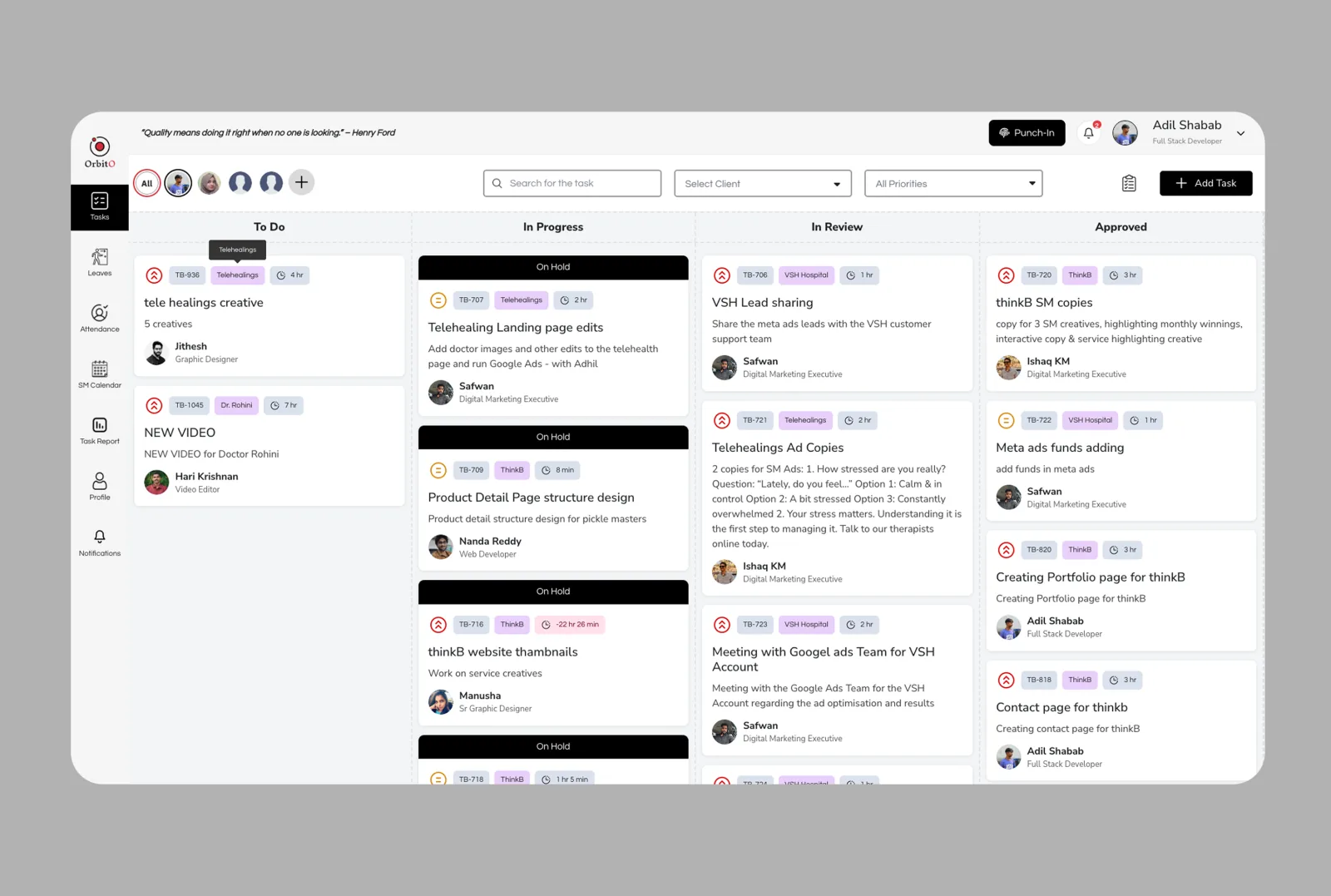 Task & Ticket Board
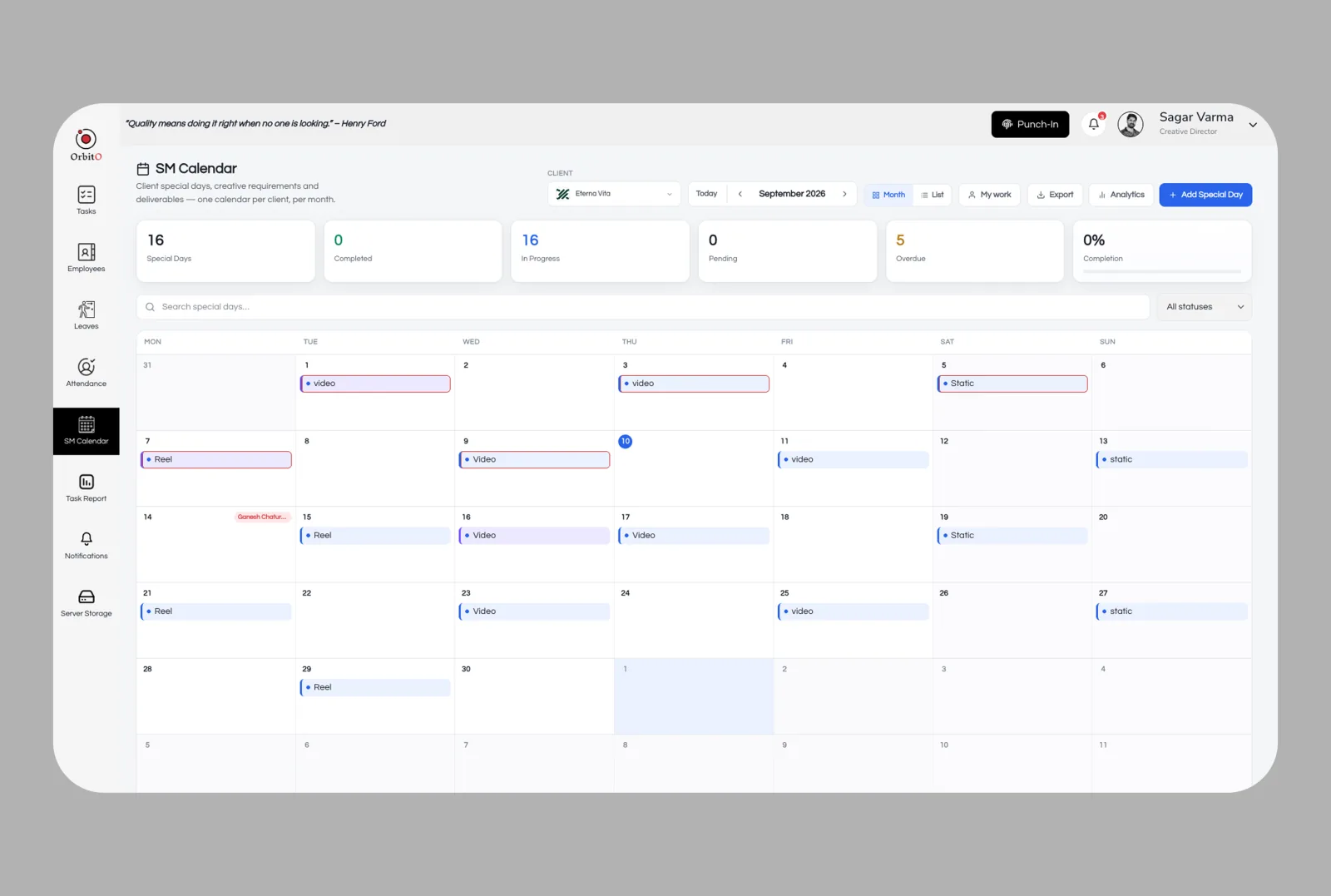 Content Calendar
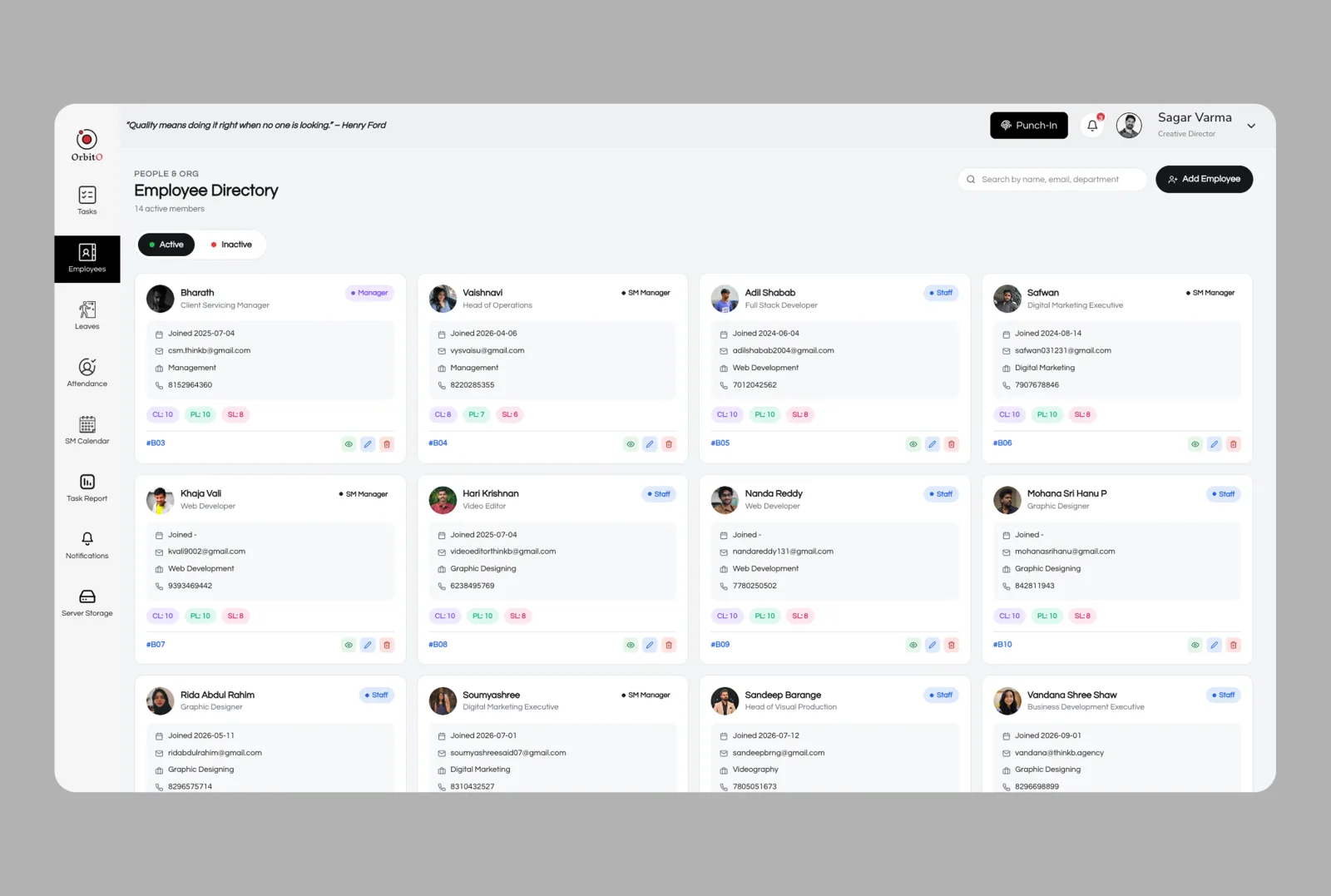 Employee Directory
What The Platform Does
Face-Recognition Attendance
Webcam punch-in/out verified against a stored face encoding, with geofenced WFO/WFH detection.
Task Time-Tracking
Start/stop/hold timers accumulate tracked seconds with a full audit trail.
Content-Calendar Workflow
Multi-day campaigns, versioned deliverables, review → approval, activity timeline.
Chunked Large-File Uploads
500 MB deliverables sliced into 15 MB chunks to route around a proxy size cap.
Nightly Compliance Sweep
Auto punches-out stragglers and flags absentees, holiday- and weekend-aware.
Installable PWA
Separate desktop/mobile component trees with offline-capable service worker.
Stack & Integrations
Frontend
Backend
Database
Integrations
How It's Built
Orbito is a decoupled SPA + REST API: a React/Vite frontend authenticates via JWT and talks exclusively to a Django REST Framework backend, with an axios client silently refreshing expired tokens and retrying queued requests. The frontend renders separate desktop and mobile component trees behind a single media-query check rather than shipping two builds, sharing one routing and API layer.
The content-calendar module is its own self-contained subsystem — a status roll-up state machine, activity log and notification fan-out — layered on the shared database, with access governed by an explicit allowlist function independent of the role field. A custom chunked-upload protocol (no third-party library) slices large deliverables client-side and reassembles them server-side to work around a hosting-provider proxy limit — designed in a written spec before implementation.